


Stainless Steel Terms Explained
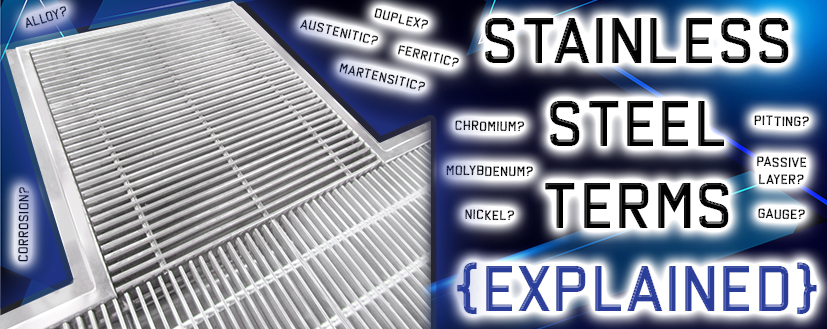
This week, we’ll go a bit technical (but not too technical!) in the world of stainless steel. Stainless steel has been around for over 100 years & in that timeframe, specific terminology has come forth. While some terms may be self-explanatory, there are others that need a little further investigation. This is where IMC comes in.
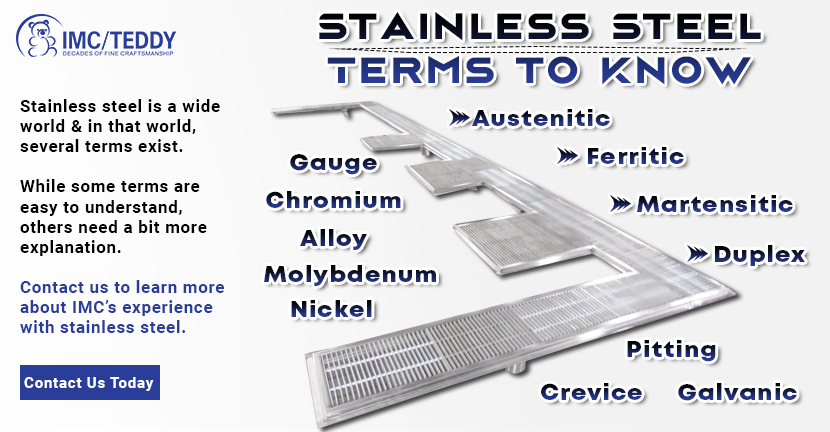
In this article, we will review a range of terms related to stainless steel to better arm you in the future. We’ll start simple & then go slightly technical. We promise to keep everything basic. Let’s begin the lesson.
The 4 Key Categories
Let’s first look at the main categories that stainless steel is generally slotted into:
a. Austenitic – Refers to non-magnetic stainless steel containing high concentrations of nickel. Type 300 & 200 series stainless steel fall into this category. It offers high corrosion resistance as well. The perfect choice for foodservice applications.
b. Ferritic – Refers to magnetic stainless steel containing no nickel. Type 400 series stainless steel falls into this category. It’s not the greatest for foodservice applications due to safety concerns of the magnets with sharp utensils & cheaper composition overall.
c. Martensitic – A high carbon, magnetic variant which is used for cutlery & some tools. Type 400 series stainless steel can also be martensitic. It’s also heat treated for higher strength. It is exceedingly difficult to weld due to the brittleness.
d. Duplex – A hybrid variant of the ferritic & austenitic types offering superior strength & corrosion resistance. Most commonly used for highly corrosive environments like oil/gas & chemical processing. Not typically seen in the foodservice world.
General Terms
Here is a list of general stainless steel terms that apply to any category:
a. Gauge – It’s a fancy word for “thickness.” Higher gauge means thinner metal, while lower gauge means thicker metal. Most foodservice gauges range from 12-18.
b. Chromium – It’s one of the key elements that makes stainless steel into what it is & how the metal gains its corrosion resistance. Stainless steel must contain a minimum of 10.5% chromium to be qualified. The chromium creates a protective, passive oxide layer that prevents rust. Chromium also gives the metal better heat resistance & strength overall.
c. Alloy – Alloys are the numbered types of stainless steel such as Type 300, Type 400, Type 200, etc. These are further broken down into “grades,” such as Type 304 or 316. It’s just a simple way of defining stainless steel.
d. Molybdenum – An extra element added to stainless steel to improve resistance to pitting & other types of corrosion. Typically needed for volatile environments such as marine or chemical processing plants.
e. Nickel – An essential element found in austenitic stainless steels that gives the metal its superior corrosion resistance & high temperature resistance. Most austenitic metals have 8-12% nickel included.
Corrosion Terms
If your stainless steel is facing any of the below, it is poor material. However, there are several types of corrosion that can potentially occur to cheaper stainless steel variants:
a. Pitting – This type of corrosion involved small, deep cavities in the metal which will eventually lead to an overall structural failure. This happens when the protective chromium oxide layer is fully broken down.
b. Crevice – Typically found in confined areas with little oxygen where acids & other components become trapped. Occurs on poorly welded products where gaps & sharp corners are present.
c. Galvanic – A phenomenon where two dissimilar metals can break down & corrode in close proximity to each other. The presence of water can speed up this process dramatically.
Is That All?
Not even close, but we tried to go over the most relevant terms in the foodservice industry. We hope the above gives you a better idea about the wide world of stainless steel – particularly in a foodservice environment.
IMC/Teddy has been working with stainless steel for well over 70 years for food service applications. IMC lives & breathes stainless steel & our knowledge of the metal is vast. Our products are proudly made in the United States of America using Type 304 stainless steel. Type 304 Series stainless steel is proven to be the most useful material in the food service industry due to its strength, durability, & corrosion resistance. For a closer look at our mission, click here.