


How to Maintain a Mixer/Slicer Table The Right Way
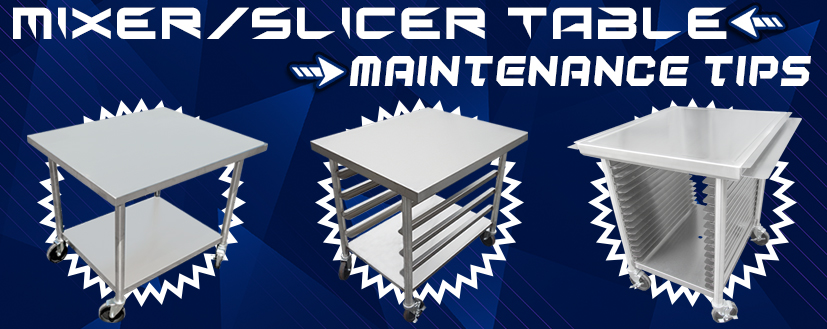
Mixer & slicer tables are mobile, heavy duty pieces designed to hold your cumbersome equipment at a workable height. With that said, they are the backbone of delis, bakeries, butcher shops & so on. This also means they are under constant use, therefore, need constant maintenance. What are some key maintenance tips to keep in mind?
In this article, we’ll go over 3 tips to keep your mixer/slicer table in check. Here are our recommended tips.
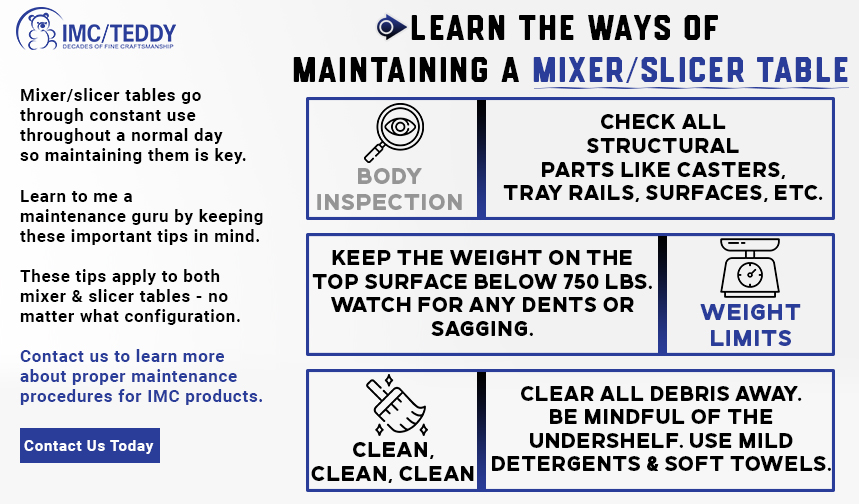
1. Body Inspection
Both mixer & slicer tables are different than standard worktables or even equipment stands. Here are a couple of key body features to take note of:
a. Casters – Every mixer/slicer table that IMC manufactures have casters equipped. Check to make sure the casters are not hitching or have anything stuck in them. If you notice any hitching, you can spray down casters with a silicone lubricant or apply grease. Lastly, inspect the casters for any cracks or major tread wear.
b. Tray Rails – Many mixer/slicer tables have tray rails to temporarily hold your ingredients or finished items. It is wise to clean these rails regularly & apply light silicone or grease to keep them sliding smoothly but avoid over-lubricating. Wipe away any residue or spills on the rails as well.
c. Inspect Surfaces – As always, check the main surface area & the undershelf for any signs of trouble. Any indication of dents or creases should be addressed immediately (more on this shortly). Undershelves are especially susceptible to debris collection from the main surface area. Be thorough & leave no stone unturned.
2. Weight Limits
Thanks to the reinforced channeling & lower gauge on mixer/slicer tables, these tables can hold heavier equipment with relative ease. However, this does not mean stacking large pieces of equipment & risking the potential for buckling.
Try to keep the weight no more than 750 lbs. In the rare instance you notice any sagging, you are nearing the limit.
3. Clean, Clean, Clean
With mixers, blenders, slicers & other equipment that leave large amounts of debris, mixer/slicer tables can start to look grungy by the end of service hours.
Use a clean microfiber towel to remove major food particles, flour accumulation, or grease. Proceed to wash the entire body with a microfiber towel with a mild detergent. Wipe the table down with clean water to remove soap residue. Air dry it completely. That’s all there is to it.
At IMC/Teddy, we manufacture a variety of mixer/slicer tables to meet your specific needs. In particular, the SMTT & SMSS models feature a unique tool tree for added storage. All units are provided with interlocking devices for quick & easy assembly & disconnecting. Custom sizes are also available. For a look at all our mixer/slicer table offerings, click here.