How Hot is Too Hot for Food Grade Stainless Steel?
In the foodservice world, especially in busy restaurants, heat comes with the territory & there’s no stopping it. In all kitchens, there are stainless steel appliances, tools & heavy equipment in play. This means these products are being exposed to sultry heat & radical temperatures on a constant basis, every day of the week. Does stainless steel ever reach a limit?
In this article, we will go over some stainless steel facts regarding heat & give you general guidelines on managing it where necessary.
Type 304 Stainless Steel Temperature Limits
Stainless steel consists of many grades, but we will focus on Type 304 as it is the main grade that IMC uses & it’s the most common type in the foodservice industry.
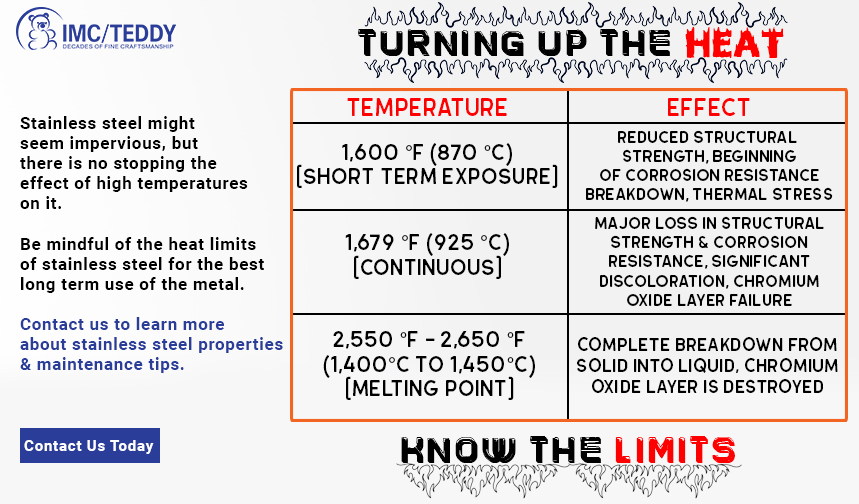
Type 304 can manage continuous temperatures of up to 1,679 °F (925°C) before damage begins. At around this temperature, the metal will begin to lose structural strength & corrosion resistance. Bear in mind, the metal will have to be exposed to this temperature continuously to see any real deterioration. For short term exposure, the heat must be below 1,600 °F (870 °C) to avoid any major damage.
With that said, type 304’s melting point is much higher between 2,550°F to 2,650°F (1,400°C to 1,450°C), but in a kitchen environment, temperatures will never reach this high.
“What’s the Damage?”
So, the question remains – Will stainless steel ever become damaged in a sultry commercial kitchen environment? The short answer is no, mostly.
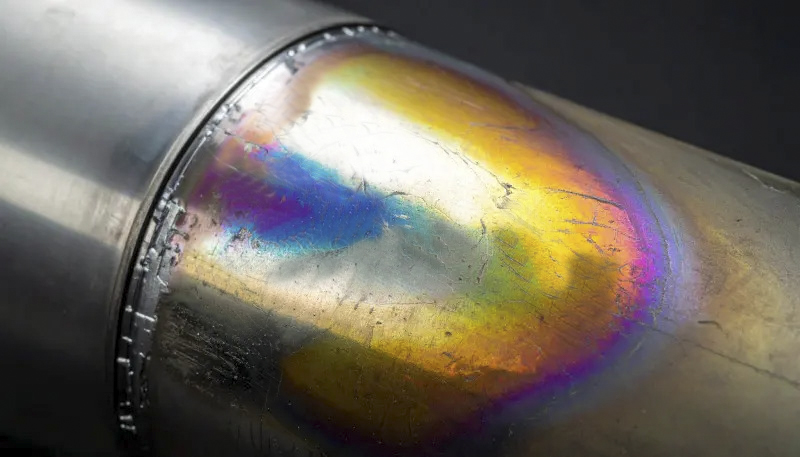
The fact is this – normal kitchen heat from appliances will not structurally damage Type 304 stainless steel, but surface discoloration is a potential concern. Discoloration can occur if you place scorching hot cookware on a stainless steel surface. Placing these types of wares on a stainless steel surface will not crack or permanently burn it, however.
Over time, prolonged exposure to direct heat can potentially cause a rainbow-like or yellowish tint to form on the stainless steel. This is merely an aesthetic change & not structural damage. Here’s a look at the discoloration in the real world:
If Your Stainless Steel Does Begin to Discolor…
Don’t worry, it’s not permanent. You can correct this change by applying a small amount of white vinegar and water on the surface then using a soft, non-abrasive cloth to get it out. You can also use lemon juice or a stainless steel polishing agent if white vinegar is not readily available.
Remember this – do not use an abrasive cleaner, wire tools, or any other harsh cleaning agents on the surface as this will only damage the surface further.
In conclusion, standard heat exposure in a commercial kitchen environment does not compromise the structural integrity of Type 304 stainless steel. However, excessive exposure can lead to minor discoloration, which can be corrected with the right tools. Interested in learning more fun facts about stainless steel? Click here.